Booking choice: The budget Asakusa walk, from $13 per person. Check dates Tour details
Senso-ji is a working Buddhist temple. Most people around you are tourists, but many are not: office workers on the way in, grandparents bringing children, people who come to the same hall every month. The rituals are simple, and doing them right is a small courtesy to them.
The steps below follow the temple's own instructions where it publishes them, with sources linked.
The quick answer
Bow at the gate, rinse your hands and mouth at the water pavilion, waft incense smoke over yourself at the burner, then drop a coin in the offering box, put your palms together and pray silently with a small bow. Do not clap at Senso-ji: clapping is for Asakusa Shrine next door. An omikuji fortune is 100 yen; tie a bad one to the rack.
How do you pray at Senso-ji?
Drop a coin in the offering box, put your palms together in front of your chest, bow your head and pray silently. Do not clap.
- Bow once as you pass through a gate.
- Rinse at the water pavilion (next section).
- Incense: fan the smoke from the burner towards yourself.
- At the hall: climb the steps, drop a coin gently into the offering box. A 5-yen coin is the popular choice, as go-en sounds like the word for a good connection.
- Pray: palms together, head bowed. The temple's suggestion is to chant "Namu Kanzeon Bosatsu", "I place my trust in Bodhisattva Kannon" (Senso-ji).
- Bow and step aside for the next person.
Guides on the budget Asakusa walk walk you through this on the spot; guests often mention being shown "how to pray correctly".
Learn it once with a guide: prayer etiquette, the temple and the shrine, in two hours.
Check dates for the budget Asakusa walkHow do you use the water basin at Senso-ji?
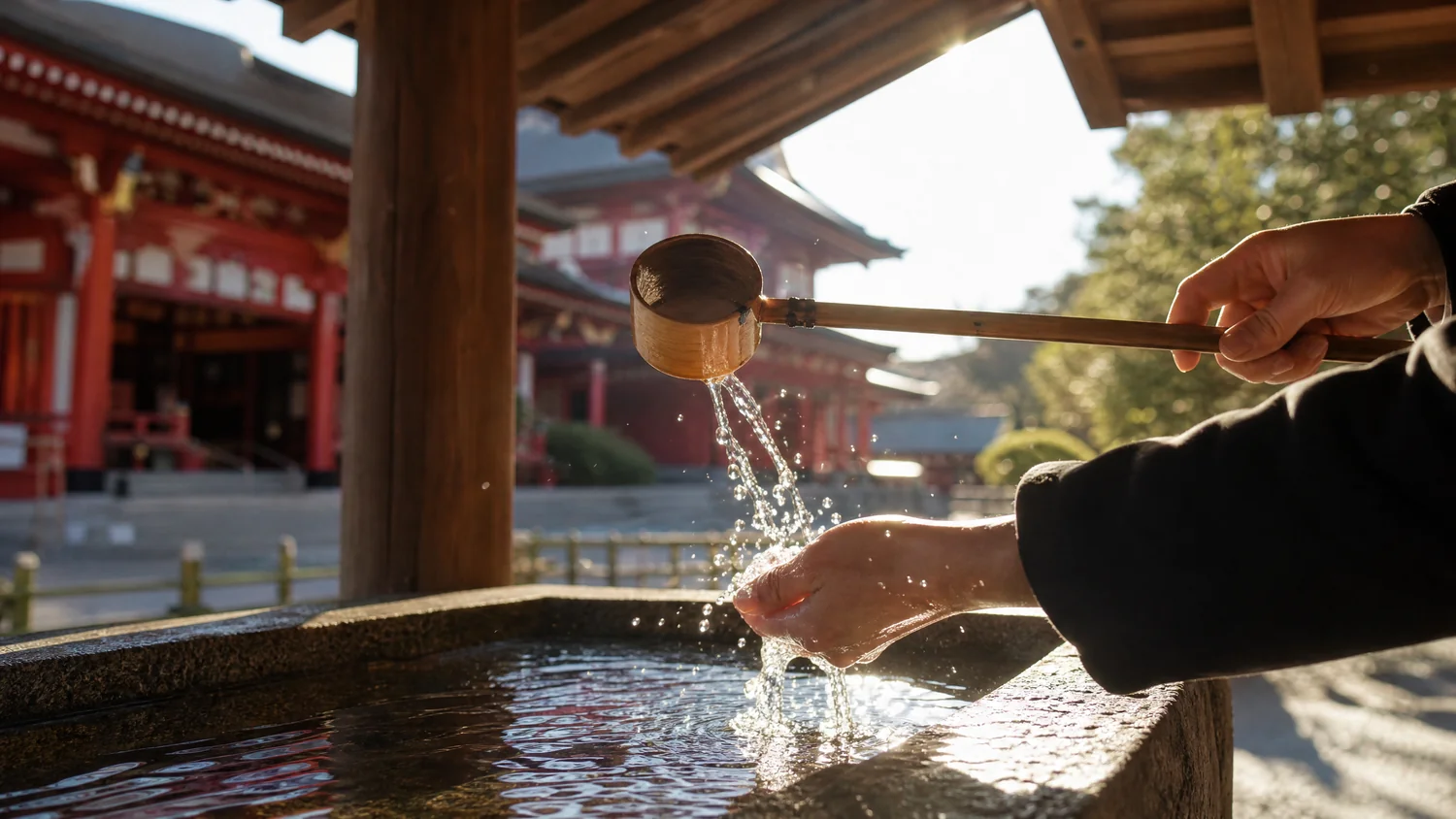
Take one ladle of water from the dragon's mouth and use it for everything: left hand, right hand, mouth, then the handle.
The temple's own four steps:
- Hold the ladle in your right hand and pour water over your left hand.
- Switch the ladle to your left hand and rinse your right hand.
- Take the ladle in your right hand again, pour a little water into your cupped left hand and rinse your mouth. Never put the ladle to your lips.
- Tip the ladle upright so the last water runs down the handle, then put it back.
Let the water fall outside the basin, never back into it. Skipping the mouth rinse is fine if you prefer.
What is the incense smoke at Senso-ji for?
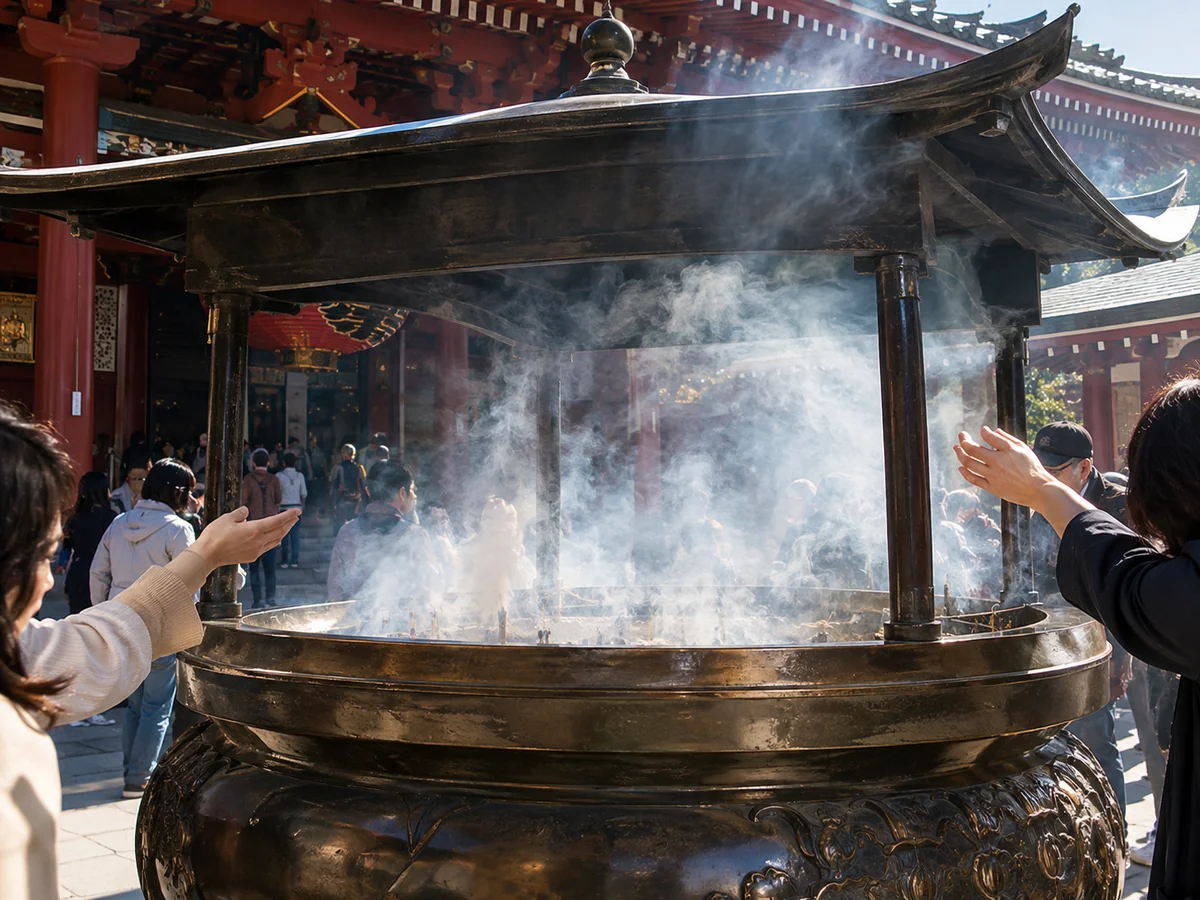
People waft the smoke over themselves for good health: traditionally, over the part of the body they want healed.
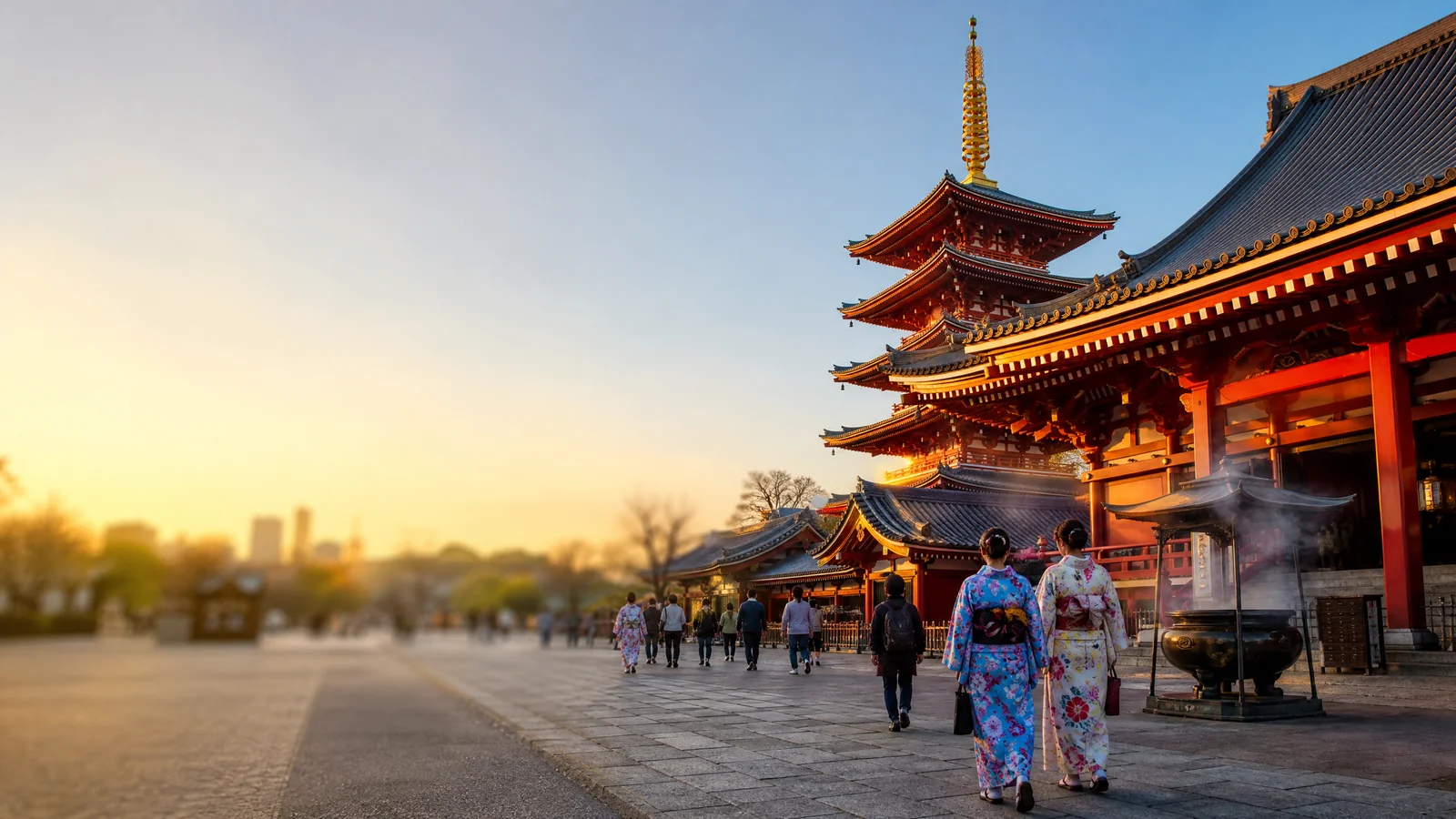
The large bronze burner, the jokoro, stands between Hozomon and the main hall. You can simply stand in the drifting smoke and wave it towards your head or shoulders. To light your own incense, buy a bundle at the stall beside the burner, where the price is posted, light it from the flame there, and place it in the ash.
Watch long sleeves and loose hair near the coals, and do not blow out a lit stick with your breath: wave it out with your hand.
Do you clap at Senso-ji?
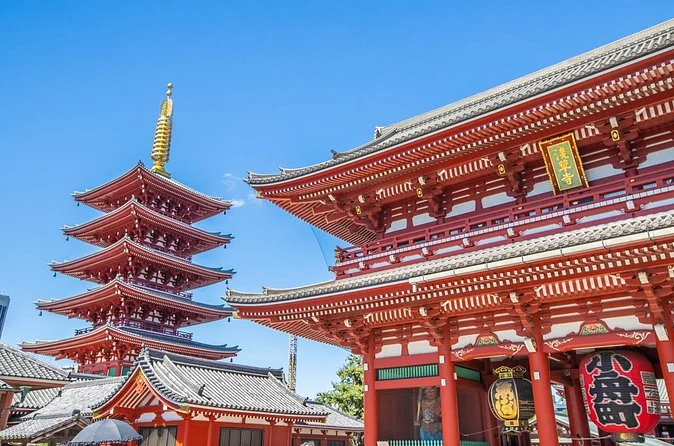
No. Senso-ji is a Buddhist temple: palms together, no clapping. At Asakusa Shrine next door, a Shinto shrine, you bow twice, clap twice and bow once.
This is the difference guides point out most. Temples honour the Buddha, shrines honour kami, and the gestures differ. At the shrine's offering box: two deep bows, two claps with your hands at chest height, a silent prayer, then one more bow (Guidoor shrine guide).
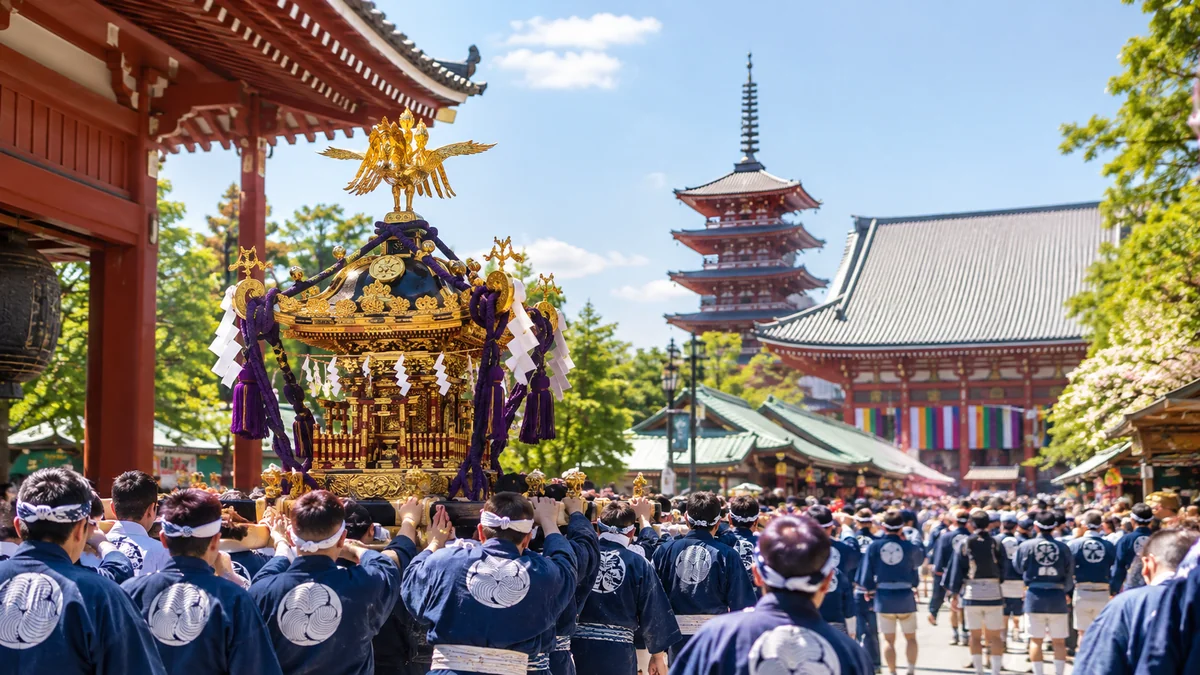
Asakusa Shrine sits behind the main hall to the right. It honours the three men tied to the finding of the Kannon statue in 628, and it is home to the Sanja Matsuri each May.
How does omikuji work at Senso-ji?
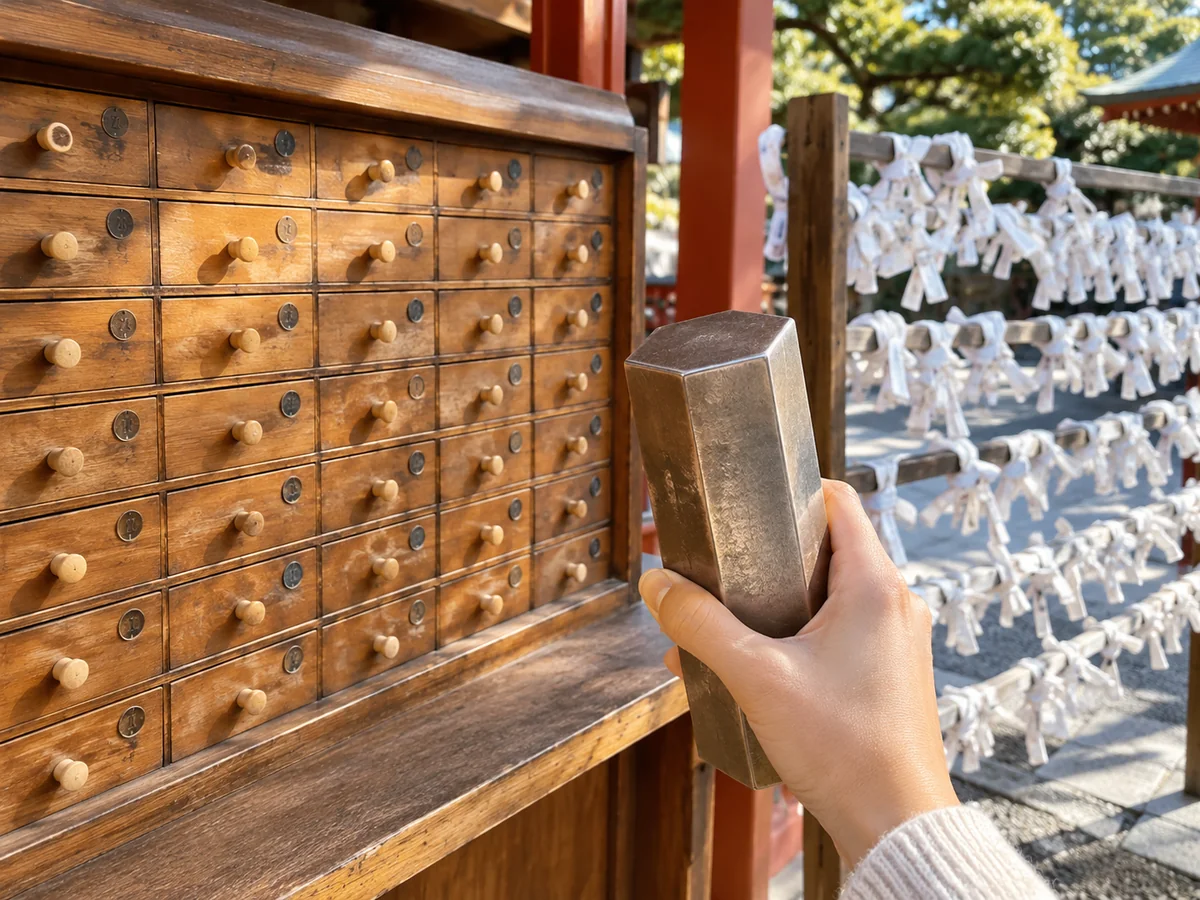
Put 100 yen in the box, shake the metal canister until a numbered stick falls out, then take a paper from the drawer with the same number.
Read your fortune and keep it if it is good. If it is bad (kyo), fold it and tie it to the rack provided, leaving the bad luck at the temple. Senso-ji's slips come with English text (JNTO).
Bad fortunes are common here. Senso-ji keeps to the old 100-slip Kannon set, in which about 30 are kyo; SoraNews24 bought 100 to check. Don't take it personally.
Where do you get a goshuin at Senso-ji?
At Yogodo hall, west of the main hall. The fee is posted at the counter and is not published on the temple's website.
A goshuin is a hand-brushed seal and calligraphy, written into a stamp book as a record of your visit. Senso-ji's English pages confirm the Senso-ji seal is given at Yogodo. Bring cash, and either your own goshuin book or buy one there.
It is a religious record, not a souvenir stamp: hand the book over open at a blank page, wait quietly, and don't ask for it in a notebook or on scrap paper.
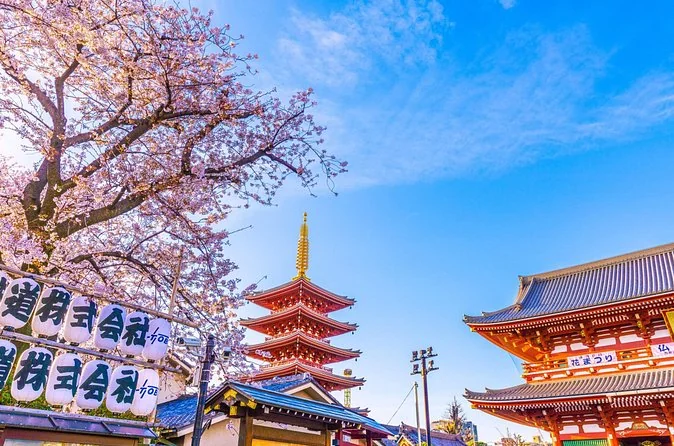
The budget walk includes Yogodo and the main hall, with a guide who shows you the rituals, from $13.
Explore the budget Asakusa walk Tour detailsWhat should you not do at Senso-ji?
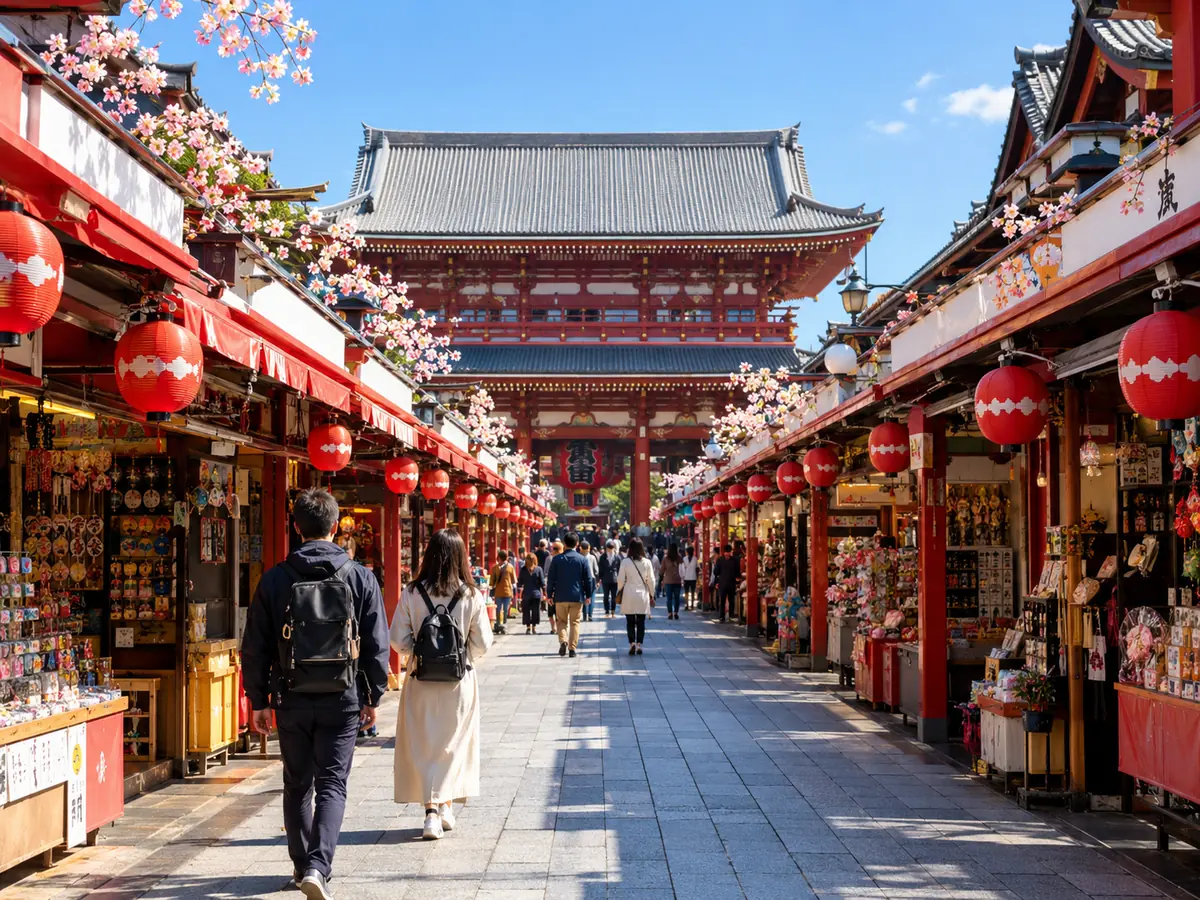
Don't eat while walking on Nakamise, don't block the hall steps for photos, and don't take food or drink into the hall.
- Eat at the stall. Nakamise shops ask you to eat by the counter, not on the move (FUN! JAPAN). More in the food guide.
- Keep the steps clear. People come to pray. Shoot from the side.
- Photos inside the hall: follow the signs on the day. The temple publishes no blanket rule online.
- Voices down inside the hall and near people praying.
- Rubbish: carry it out; bins are rare.
Is there a dress code at Senso-ji?
No. Shorts and sleeveless tops are fine in summer, and kimono or yukata are welcome any time.
No shoes come off for the main hall: you stand at the offering box. Dress for the weather and for steps. If you want to visit in kimono, the kimono rental guide covers prices and timing, and the hours guide tells you when the hall is open.
Arrive curious, leave knowing the difference between a temple and a shrine: the budget walk, rated 5.0.
Check dates for the budget Asakusa walkFrequently asked questions
Should you clap at Senso-ji?
No. Senso-ji is a Buddhist temple, so you put your palms together and bow without clapping. Clapping is for Asakusa Shrine next door.
How much money should I offer at Senso-ji?
Any amount you like. Many people use a 5-yen coin, because go-en also means a good connection.
What do I do with a bad omikuji fortune?
Fold it and tie it to the rack beside the omikuji counters, so the bad luck stays at the temple. Good fortunes you keep.
Can non-Buddhists pray at Senso-ji?
Yes. Visitors of any faith are welcome to pray or simply watch. Follow the same steps, or just stand quietly for a moment.
Ready to book
Choose your tour
Free cancellation up to 24 hours before on every option. Prices are from-prices in USD and move with the season.
Asakusa & Senso-ji Walking Tour
The cheapest guided walk, sweets tasting on Nakamise
Senso-ji & Old Tokyo Walking Tour
- English-speaking local guide
- Small group, 12 people at most
- Nakamise, Senso-ji, Asakusa Shrine, Hoppy Street, Azuma Bridge