Booking choice: The street food crawl, from $74 per person. Check dates Tour details
Pilgrims have bought snacks on the way to Senso-ji since the Edo period. Some of those snacks are still sold on Nakamise, alongside newer classics like melon pan from a bakery that opened in 1945.
Below: the snacks worth stopping for, what the two food tours actually serve, and how to eat on Nakamise without annoying anyone.
The quick answer
Try kibi dango, age-manju, ningyo-yaki, kaminari okoshi and melon pan around Nakamise, then sushi, soba or monjayaki for a meal. The street food crawl ($74, 2 hours, 7+ bites) works as lunch; the 12-dish tour ($73, 2.5 hours) is an evening with sake and an izakaya. Eat at the stall, never while walking.
What should you eat in Asakusa?
The old Nakamise snacks first: kibi dango, age-manju, ningyo-yaki, kaminari okoshi and melon pan. Then a real meal of sushi, soba, tempura or monjayaki.
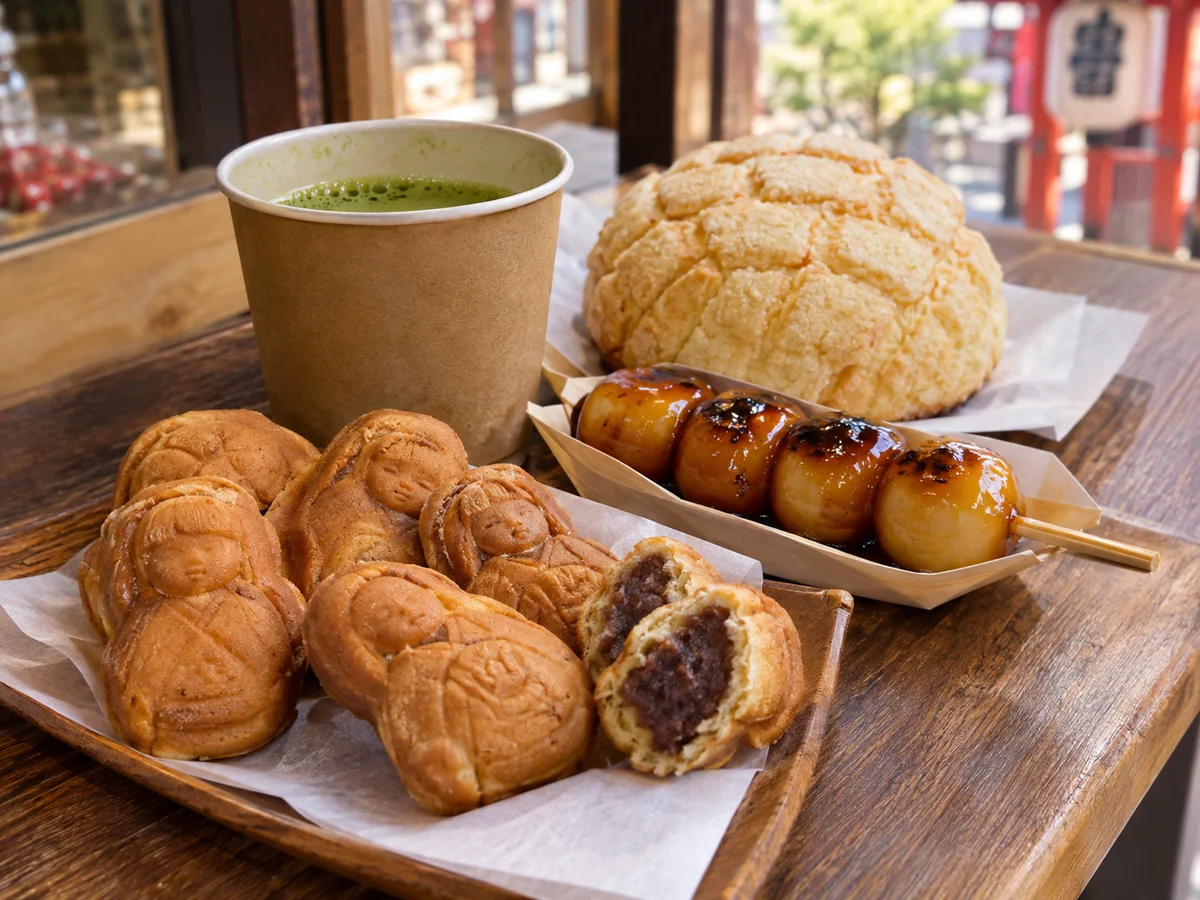
- Kaminari okoshi: crunchy puffed-rice crackers bound with syrup and peanuts, first sold by vendors near Kaminarimon in the 18th century (Go Tokyo). Tokiwado by the gate makes them fresh.
- Ningyo-yaki: small sponge cakes filled with sweet red bean paste, baked in moulds shaped like lanterns, pigeons and the pagoda. Kimuraya on Nakamise makes them the traditional way (FUN! JAPAN).
- Kibi dango: soft millet dumplings on skewers, rolled in roasted soybean flour, at Azuma with the white rabbit logo.
- Age-manju: a deep-fried bun filled with sweet bean paste, a Nakamise staple.
- Melon pan: a sweet bun with a crackled sugar crust. Asakusa Kagetsudo has sold it since 1945 and fills it with ice cream too (Time Out).
- Senbei: rice crackers grilled over charcoal in soy, salt or plum.
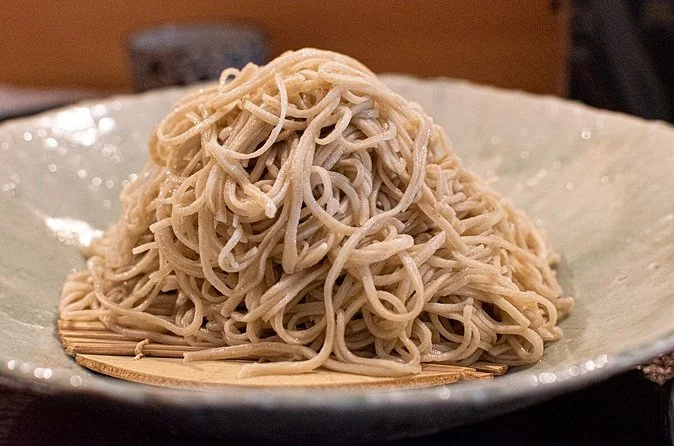
- Meals: standing sushi, cold soba with tempura, and monjayaki, a runny griddle pancake you cook at your table.
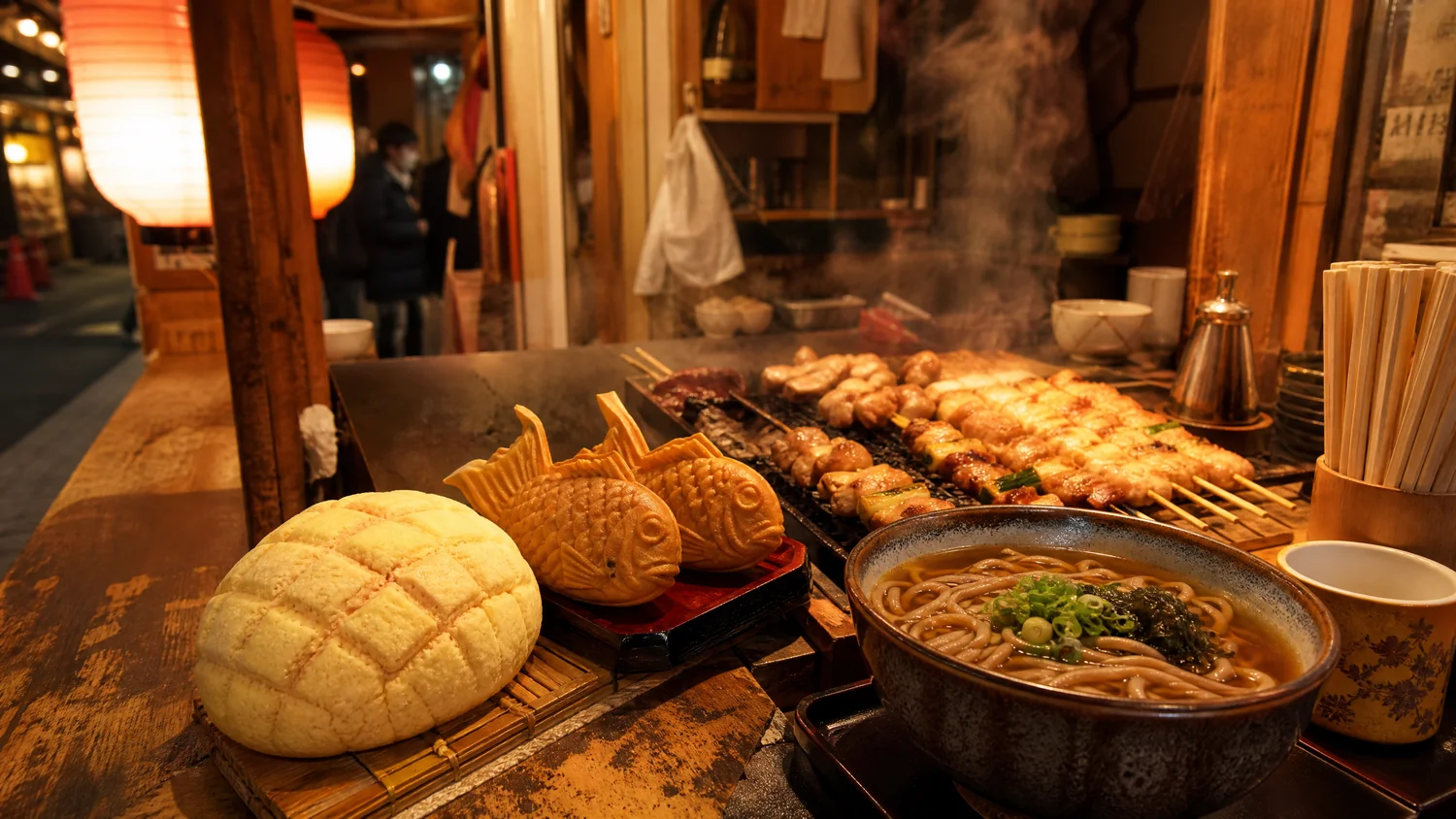
Seven or more of these bites in two hours, starting at a standing sushi bar.
Check dates for the street food crawlWhat do you eat on an Asakusa food tour?
The street food crawl starts with sushi and moves through soba, tempura, sweet potato and melon pan to matcha sweets. The 12-dish tour adds monjayaki, an izakaya and a sake tasting.
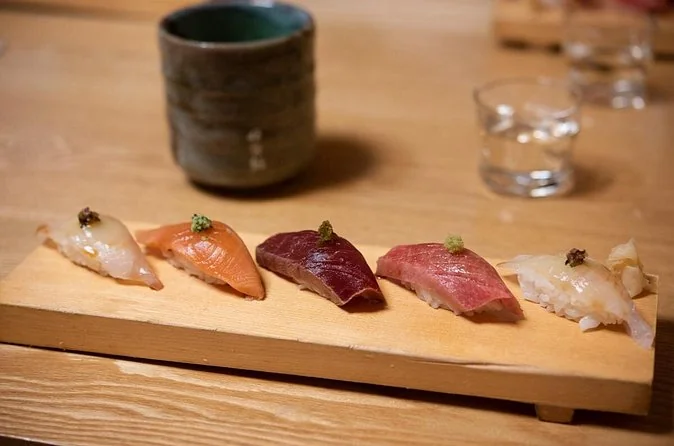
Neither listing prints a fixed menu, so here is what guests report. On the street food crawl by Ninja Food Tours: "starting with sushi, followed by caramelized sweet potato (my favorite!), soba and tempura, melon pan, and matcha sweets". Another guest: "sushi, tempura, soba, dango, and sweet potato treats". It meets at Hinatomaru, a standing sushi bar on Kaminarimon Yanagi Koji, and ends at Senso-ji.
The 12-dish tour by Japan Guide Star lists Wasake for sake, Taiyaki Sawada for fish-shaped cakes and Rokumonsen, where guests cook their own monjayaki: "I especially liked the monja restaurant where we cooked our own dishes." Others mention teppanyaki and an izakaya.
Which Asakusa food tour is better?
The street food crawl ($74) for a daytime walk and a long list of bites. The 12-dish tour ($73) for a sit-down evening with sake.
Side by side, from the listings:
| Street food crawl | 12-dish food tour | |
|---|---|---|
| Operator | Ninja Food Tours | Japan Guide Star |
| From | $74 | $73 |
| Rating | 5.0 (293 reviews) | 4.9 (252 reviews) |
| Length | 2 hours | 2.5 hours |
| Food | 7+ bites, listed as lunch | 12 dishes at local eateries |
| Drinks | Matcha (guests report) | Sake tasting at Wasake |
| Time at Senso-ji | 20 min, at the end | 10 min |
| Group | Small (guests report about 6) | Up to 20 |
| Special diets | Limited; tell them a week ahead | Ask when you book |
Both start near Kaminarimon. Both rate 4.9 to 5.0, and guests on both say the same thing: come hungry. On the crawl, one group "ate so much we were unable to fit in the last dessert of ice cream".
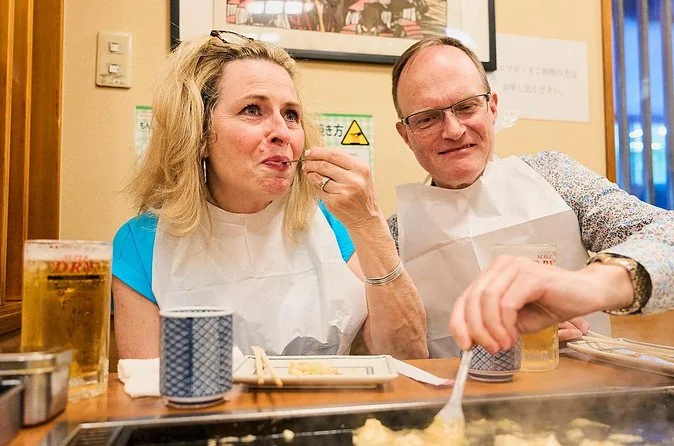
An evening of twelve dishes: monjayaki you cook yourself, taiyaki, an izakaya table and sake to finish.
Explore the 12-dish food tour Tour detailsIs an Asakusa food tour worth it?
Yes, if you want sit-down places and someone to explain what you are eating. The Nakamise snacks alone you can buy yourself for a few coins each.
A food tour's value is in the places you would not walk into: the standing sushi bar, the monja grill, the sake bar. Guides also teach the how, from the right way to eat nigiri to which sauce goes on what. One guest: "He taught us the proper way to eat nigiri and soba, and introduced us to university potatoes and melonpan!"
If you only want the sweets, skip the tour: walk Nakamise with some cash and graze. For the history without food, the small-group Senso-ji walk costs $30 and ends with restaurant tips.
Can you eat while walking on Nakamise?
No. Buy your snack, eat it by the stall or step aside, and keep your rubbish until you find a bin.
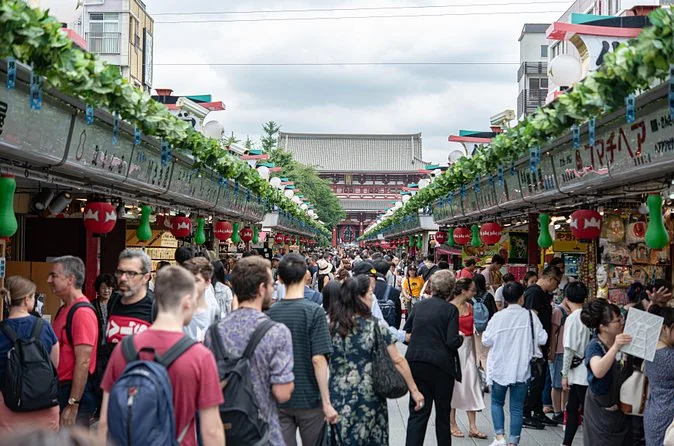
Eating on the move is considered rude in Japan, and many Nakamise shops post signs asking you to eat at the counter rather than while strolling (FUN! JAPAN). The street is narrow and packed by late morning, so a dripping skewer and a crowd do not mix.
Bins are scarce, so keep a small bag for wrappers. And never carry food or drink into the main hall.
Can vegetarians or people with allergies do an Asakusa food tour?
Partly. The street food crawl can adapt if you message a week ahead, but vegan, vegetarian and gluten-free options are limited. Tell the 12-dish tour at booking.
The crawl's listing is blunt: requests must arrive at least a week before, and last-minute changes are not possible. Guests with allergies report it can work: one with a seafood allergy called the guide "big help". Sushi, dashi broth and soy sauce run through much of the menu, so strict vegans will miss a lot.
Wheat is in most soba, tempura batter, soy sauce, melon pan and ningyo-yaki, so gluten-free visitors should check every stop.
Tell them your diet a week ahead, then let a local guide pick the stops: the street food crawl.
Check dates for the street food crawlWhen is the best time for an Asakusa food tour?
Lunchtime for the street food crawl, evening for the 12-dish tour. Either way, skip breakfast.
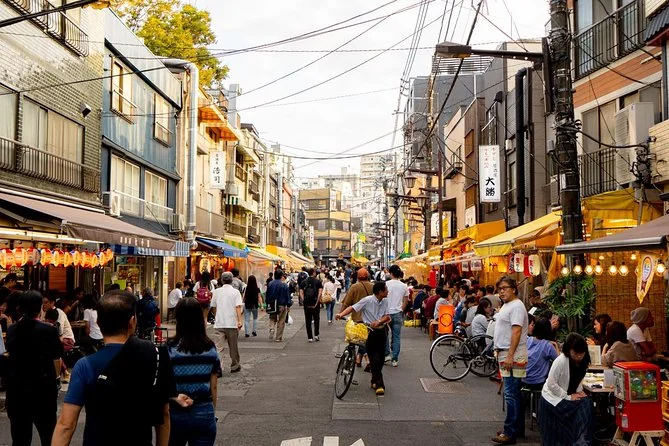
The crawl is listed as lunch, and its sweets suit the afternoon. The 12-dish tour leans into the evening, with a sake bar as the last stop; one guest's ended in "a full-on karaoke experience". Nakamise stalls start closing around 17:00 to 18:00, so for the snacks on your own, go before then.
For a full Asakusa day: temple at 8:00, the crawl at lunch, a kimono in the afternoon or a sumo show in the evening.
Frequently asked questions
What food is Asakusa famous for?
Kaminari okoshi rice crackers, ningyo-yaki cakes, kibi dango, age-manju and melon pan on the snack side; sushi, soba, tempura and monjayaki for a meal.
How much food is on an Asakusa food tour?
Enough for a meal. The street food crawl serves 7 or more bites and is listed as lunch; the evening tour serves 12 dishes.
Are drinks included on Asakusa food tours?
The 12-dish tour includes a sake tasting. On the street food crawl guests report matcha with the sweets.
Is Nakamise food expensive?
No. Most snacks cost a few hundred yen. Carry cash, as some stalls take nothing else.
Ready to book
Choose your tour
Free cancellation up to 24 hours before on every option. Prices are from-prices in USD and move with the season.
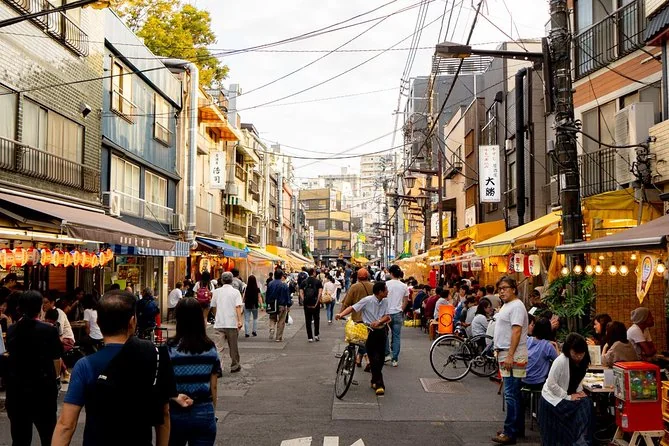
Asakusa Street Food Crawl, 7+ Bites
- Seven or more local bites, enough for lunch
- English-speaking food guide
- Lanes around Kaminarimon and Nakamise, then Senso-ji
Asakusa Food Tour: 12 Dishes at Local Eateries
A sit-down dinner crawl with sake, taiyaki and izakaya plates
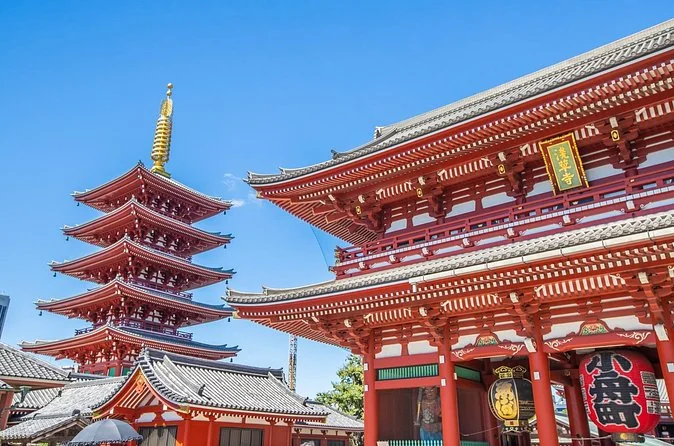
Senso-ji & Old Tokyo Walking Tour
- English-speaking local guide
- Small group, 12 people at most
- Nakamise, Senso-ji, Asakusa Shrine, Hoppy Street, Azuma Bridge